
Manual boat lifting wastes time and strains your body. It also increases risk of damage and accidents. A linear actuator system fixes this with controlled, push-button lifting.
This guide shows how it works, where it fits, and how you can use it.
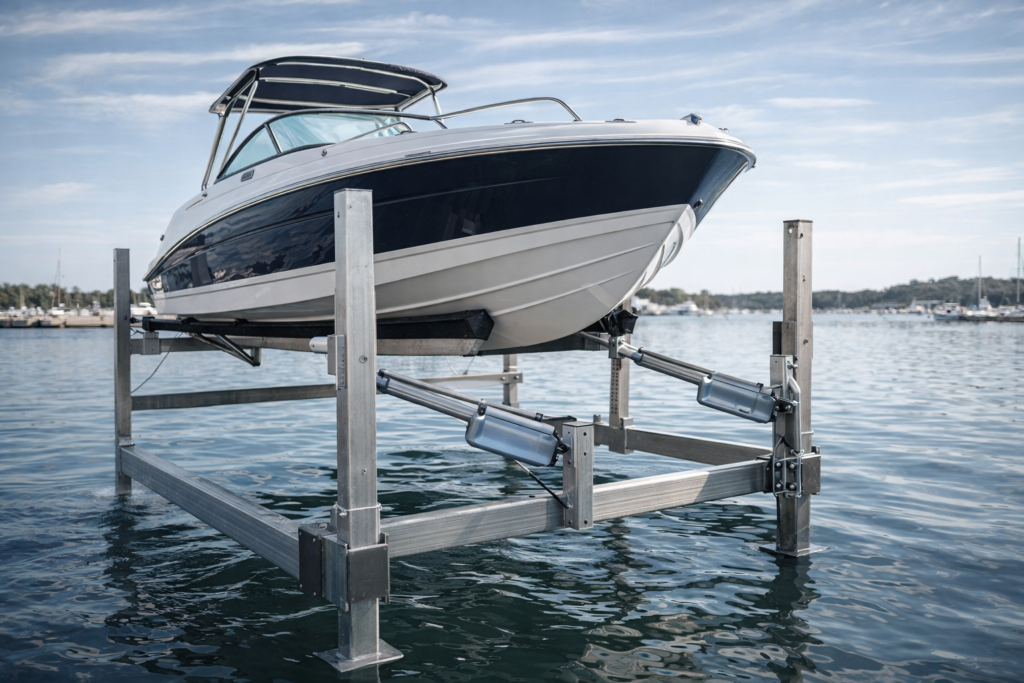
What Is a Linear Actuator Boat Lift System
A linear actuator converts electrical energy into straight-line motion. It pushes or pulls a load with high force.
In a boat lift setup, the actuator replaces:
- Manual winches
- Hydraulic pumps
- Chain or pulley systems
You get smooth, controlled lifting with minimal effort.
How the System Works
Core components:
- Linear actuator
- Power supply (12V or 24V DC)
- Control switch or remote
- Mounting brackets
- Limit switches
Process:
- You press a switch
- The actuator extends
- It lifts the boat platform
- Limit switch stops movement at set height
You control lift speed and position precisely.
Why Manual Boat Lifting Fails
Common issues:
- High physical effort
- Uneven lifting
- Risk of dropping the boat
- Time-consuming setup
- Frequent maintenance
Example:
A 300 kg boat needs consistent lifting force. Manual systems often create imbalance, leading to structural stress.
Benefits of Using a Linear Actuator
1. Effortless operation
- Lift heavy loads with a button
2. High precision
- Stop at exact height every time
3. Safety improvement
- Controlled motion reduces accidents
4. Compact design
- Fits small docks and storage areas
5. Low maintenance
- Fewer moving parts than hydraulic systems
Key Specifications You Should Check
Before choosing an actuator, focus on:
- Load capacity: 1000N to 10000N+ based on boat weight
- Stroke length: Defines lift height
- Speed: Typically 4 mm/s to 20 mm/s
- Voltage: 12V for small setups, 24V for heavy loads
- IP rating: IP65 or higher for marine use
Tip:
Always choose 25 to 30 percent higher load capacity than your actual requirement.
Applications in Boat Handling
You can use linear actuators in:
- Boat lift platforms
- Trailer loading systems
- Dock-mounted lifts
- Bimini top automation
- Hatch and storage access
Installation Overview
Basic steps:
- Measure boat weight and lift height
- Select actuator with required force
- Fix mounting brackets securely
- Connect power supply and control unit
- Test movement without load
- Run full load test
Use corrosion-resistant materials in marine environments.
Safety Tips
- Install limit switches
- Use waterproof connectors
- Add emergency stop switch
- Inspect mounts regularly
- Avoid overload conditions
When You Should Upgrade
You should switch to a linear actuator system if:
- You lift boats daily
- You face frequent manual failures
- You want faster loading and unloading
- You need safer operation
FAQs – People Also Ask
1. What is the best actuator for a boat lift?
Choose one with high load capacity, IP65 or above protection, and stainless steel or coated body for corrosion resistance.
2. How much weight can a linear actuator lift?
Standard actuators lift from 200N to over 8,000N. Heavy-duty models handle large boats when used in pairs.
3. Is a linear actuator better than a hydraulic system?
For small to medium boats, yes. It needs less maintenance, costs less, and is easier to install.
4. Can I install a boat lift actuator myself?
Yes, if you have basic electrical and mechanical knowledge. For heavy systems, use professional support.
5. What voltage is used in boat lift actuators?
Most systems use 12V or 24V DC. Choose based on load and usage frequency.
6. How long does a linear actuator last?
A good actuator lasts 5 to 10 years with proper use and maintenance.
7. Are linear actuators waterproof?
Marine-grade actuators come with IP65 to IP67 ratings. These handle splashes and outdoor conditions.
8. How fast does a boat lift actuator move?
Typical speed ranges from 4 mm/s to 20 mm/s. Higher force usually means lower speed.
9. Do I need two actuators for a boat lift?
For larger platforms, yes. Dual actuators provide balanced lifting and better stability.
10. What maintenance is required?
Check wiring, clean surfaces, inspect mounts, and avoid overloading. No oil or fluid replacement needed like hydraulics.

Kathir Sudhir Automation India specializes in advanced motion control systems, industrial automation solutions, and medical-grade linear actuator technologies for healthcare and rehabilitation equipment manufacturers.
With recognized industry certifications and multiple awards for innovation in automation systems, the company delivers reliable, high-performance electromechanical solutions tailored for medical and industrial applications.
Certifications & Recognition
Zed Bronze Certificate
Member at Confederation of Indian Industry (CII)
TANSTIA Member Certificate