
Handling small 15ml pharma bottles at high speed is hard without automation. A vibratory bowl feeder with a controller solves this by aligning and feeding bottles with precision.
You get consistent output, fewer errors, and better production flow with the right setup.
What is a 15ml Pharma Bottle Bowl Feeder?
A vibratory bowl feeder is an automated system that:
- Sorts and orients bottles
- Feeds them one by one into machines
- Maintains a steady flow rate
It works as the “heart” of automated production lines by ensuring continuous feeding of components.
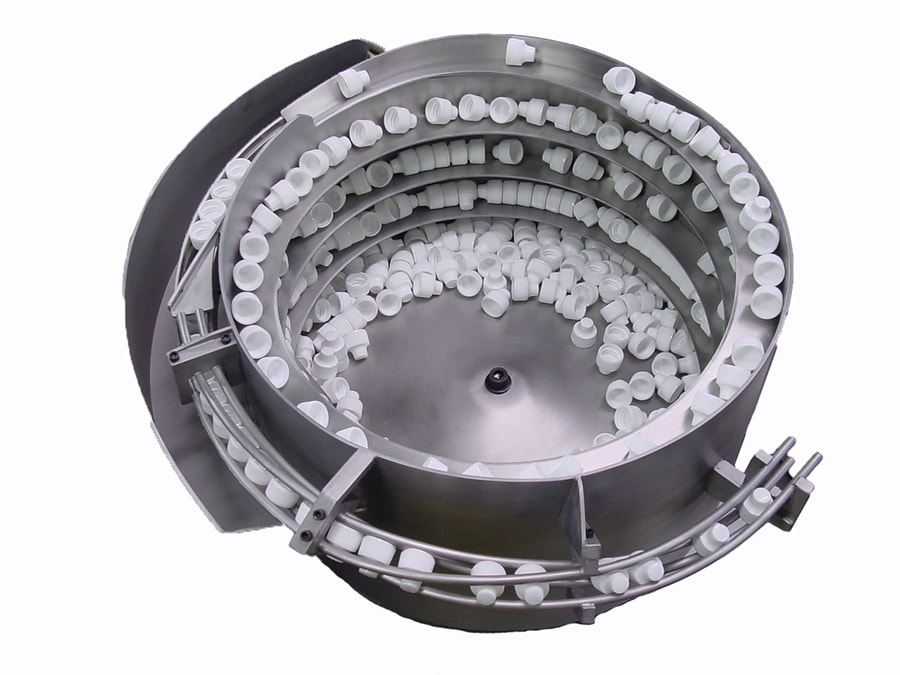
Visual: Typical Pharma Bowl Feeder System
How It Works
Step-by-step operation
- Bulk bottles enter the bowl
- Vibration moves bottles upward in a spiral path
- Special tooling aligns bottles
- Incorrect orientation gets rejected
- Correct bottles exit through a track
Role of Vibratory Controller
- Controls vibration frequency
- Adjusts feed speed
- Maintains smooth flow
- Prevents jams and overflow
Key Components Required
- Bowl feeder (SS 304 or SS 316 for pharma)
- Vibratory drive unit
- Controller unit
- Linear feeder track
- Sensors and hopper
Key Features and Technology
- Stainless steel construction for hygiene
- Cleanroom compatibility
- Adjustable speed control
- Low noise design
- Custom tooling for 15ml bottles
- Sensor-based automation
Pharma-grade feeders often meet strict hygiene and cleanroom standards like ISO and GAMP.

Key Benefits
- High accuracy feeding
- Reduced manual labor
- Continuous production
- Minimal product damage
- Easy integration with filling lines
Key Specifications (Typical)
- Output: 50 to 200 bottles per minute
- Material: SS 304 / SS 316
- Controller: Digital frequency controller
- Bowl size: Custom based on bottle size
- Power: 230V / 50Hz
Comparison Table
| Feature | Standard Feeder | Pharma Bowl Feeder |
|---|---|---|
| Material | Mild steel | SS 304 / 316 |
| Hygiene | Low | High |
| Accuracy | Medium | High |
| Cleanroom Use | No | Yes |
| Cost | Lower | Higher |
Key Application Areas
- Pharmaceutical bottle filling lines
- Syrup and liquid packaging
- Tablet packaging units
- Medical device assembly
Why industries use it
- Strict quality control
- High production demand
- Zero contamination requirement
Advantages and Disadvantages
Advantages
- High-speed automation
- Consistent orientation
- Low maintenance
- Energy efficient
Disadvantages
- Initial cost is high
- Requires customization
- Setup tuning needed
How to Choose the Best System
Key Aspects to check
- Bottle size compatibility (15ml)
- Material quality
- Controller type
- Output speed
- Ease of cleaning
Step-by-Step Buying Process
- Define bottle dimensions
- Check production capacity
- Select material grade
- Choose controller type
- Request demo or sample
- Finalize customization
Checklist for You
- ✔ Is it pharma-grade stainless steel?
- ✔ Does it support cleanroom use?
- ✔ Is the controller adjustable?
- ✔ Does it match your speed requirement?
- ✔ Is after-sales support available?
Real Example
A pharma packaging line using a vibratory feeder can handle up to 2000 parts per minute depending on design and size.
Operations and Functions
- Continuous feeding
- Orientation correction
- Speed regulation
- Integration with conveyors and filling machines
Internal Links (Explore More)
- https://www.kathirsudhirautomation.com/industrial
- https://www.kathirsudhirautomation.com/
- https://www.kathirsudhirautomation.com/contact
- https://www.kathirsudhirautomation.com/about
- https://www.kathirsudhirautomation.com/industrial#Vibratory-Feeder-Controller
Conclusion
A 15ml pharma bottle bowl feeder with a vibratory controller improves speed, accuracy, and consistency in production.
You reduce manual work, avoid errors, and maintain strict hygiene standards with the right system.
FAQs
1. What is a vibratory bowl feeder used for?
It sorts and feeds components automatically in production lines.
2. Why is it important in pharma?
It ensures hygiene, accuracy, and contamination-free handling.
3. What controller is used in bowl feeders?
A vibratory feeder controller manages speed and vibration.
4. Can it handle different bottle sizes?
Yes, with customization and tooling changes.
5. What material is best for pharma feeders?
SS 304 or SS 316 for hygiene and corrosion resistance.
6. How fast can a bowl feeder work?
It can reach hundreds to thousands of parts per minute.
7. Is maintenance required?
Minimal, mainly cleaning and tuning.
8. Does it damage bottles?
No, proper design prevents scratches and damage.
9. Can it integrate with filling machines?
Yes, it connects easily with automated lines.
10. How do I select the right feeder?
Match size, speed, material, and controller to your production needs.

Kathir Sudhir Automation India specializes in advanced motion control systems, industrial automation solutions, and medical-grade linear actuator technologies for healthcare and rehabilitation equipment manufacturers.
With recognized industry certifications and multiple awards for innovation in automation systems, the company delivers reliable, high-performance electromechanical solutions tailored for medical and industrial applications.
Certifications & Recognition
Zed Bronze Certificate
Member at Confederation of Indian Industry (CII)
TANSTIA Member Certificate