
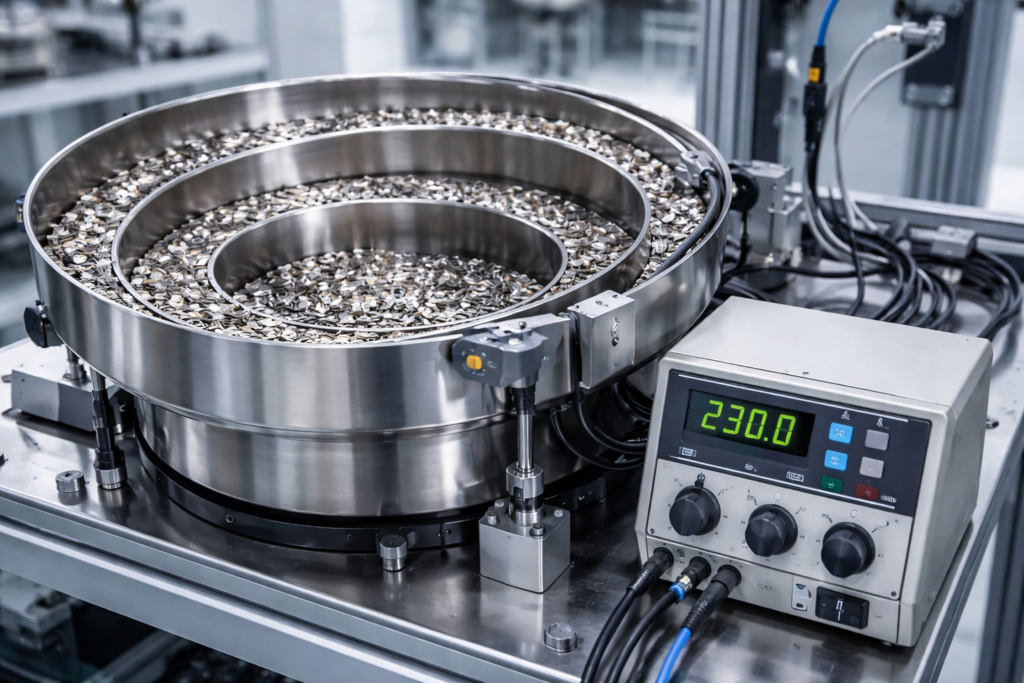
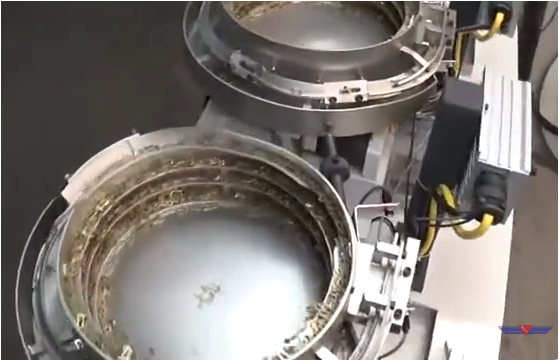
A vibratory feeder bowl controller for electric terminals is an electronic unit that regulates the vibration intensity of a feeder bowl to ensure smooth and consistent movement of small components. It precisely controls voltage supplied to the magnetic coil, allowing delicate electric terminals to travel along a helical track without damage or jamming. With features like speed adjustment, soft-start, and sensor-based automation, it plays a critical role in modern automated assembly systems. These controllers help maintain efficiency, accuracy, and reliability in high-speed production environments.
Key Aspects of Feeder Controllers for Terminals
- Precision Control: Adjusts vibration levels using potentiometers or digital interfaces for smooth feeding
- Automation Integration: Supports sensors to start/stop feeding automatically
- Performance Tuning: Voltage control (0–230V), soft-start, and fine speed adjustment
- Protection: Overload protection and industrial-grade enclosures (e.g., IP54)
- Consistency: Ensures uniform flow of electric terminals without clogging
⚙️ How It Is Used & Works
A vibratory feeder bowl controller works by regulating electrical input to a magnetic coil that generates vibrations.
Working Process:
- Electrical supply is fed into the controller
- Controller adjusts voltage and frequency
- Magnetic coil produces controlled vibrations
- Terminals move upward in a spiral (helical track)
- Sensors monitor flow and control ON/OFF automatically
This ensures precise orientation and feeding of electric terminals for assembly lines.
Key Application Areas & Reasons
- Electrical terminal manufacturing – precise handling of small parts
- Automotive wiring harness assembly – consistent feeding of connectors
- Electronics manufacturing – delicate component handling
- Packaging automation – organized part delivery
Reasons for Use:
- Reduces manual handling
- Improves accuracy and speed
- Minimizes part damage
Steps to Follow (Implementation Guide)
- Select suitable feeder bowl and controller
- Connect controller to power supply
- Integrate sensors for automation
- Adjust vibration intensity and speed
- Test with actual electric terminals
- Fine-tune for optimal performance
Checklist for You
- Correct voltage compatibility (0–230V)
- Sensor integration available
- Overload protection included
- Adjustable speed control
- Industrial-grade build (IP rating)
- Suitable for terminal size and weight
🧩 Required Components
- Vibratory feeder bowl
- Feeder controller unit
- Magnetic coil (drive unit)
- Sensors (track level sensors)
- Control panel / wiring setup
Operations & Functions
- Regulates vibration amplitude
- Controls feeding speed
- Enables automatic ON/OFF
- Prevents overflow using sensors
- Protects system from overload
🚀 Key Features and Technology
- Digital/analog voltage control
- Soft-start technology
- Sensor-based automation
- Overload & short-circuit protection
- Compact industrial design
- High efficiency with low power consumption
Key Benefits & Specifications
Benefits
- Improved production efficiency
- Consistent part orientation
- Reduced downtime
- Lower maintenance
- Enhanced product quality
Typical Specifications
- Voltage Range: 0–230V
- Frequency Control: Adjustable
- Protection: Overload & short circuit
- Enclosure: IP54 or higher
- Control Type: Analog/Digital
Advantages and Disadvantages
Advantages
- High precision control
- Easy integration with automation systems
- Reduced manual labor
- Better consistency
Disadvantages
- Initial setup cost
- Requires tuning for different components
- Skilled setup may be needed
Comparison Table
| Feature | Basic Controller | Advanced Controller |
|---|---|---|
| Speed Control | Manual | Digital precision control |
| Sensor Integration | Limited | Fully supported |
| Protection Features | Basic | Advanced (IP rated) |
| Efficiency | Moderate | High |
| Automation Compatibility | Low | High |
🔍 Examples
- Feeding copper terminals in wiring harness assembly
- Sorting small connectors in electronics production
- Aligning pins for automated insertion machines
Conclusion
A vibratory feeder bowl controller is a vital component in automated electric terminal handling systems. It ensures precise, efficient, and damage-free movement of small components, making it indispensable in modern manufacturing. By integrating advanced control features and automation capabilities, businesses can significantly enhance productivity and operational reliability.
FAQs
1. What is a vibratory feeder bowl controller used for in electric terminal assembly?
It is used to regulate vibration and ensure smooth, consistent feeding and orientation of electric terminals during automated assembly.
2. What is the function of a vibratory feeder bowl controller?
Its main function is to control voltage and vibration intensity, ensuring proper movement and positioning of components.
3. Which companies supply vibratory feeder bowl controllers for electric terminals in India?
Several industrial automation companies supply them, including specialized manufacturers and solution providers like Kathir Sudhir Automation.
4. How does a feeder controller improve part orientation for electric terminals?
By controlling vibration precisely, it ensures terminals move in a consistent path, allowing correct alignment and orientation.
5. Which is the best brands of vibratory feeder bowl controllers for electric terminal feeding systems?
Top brands include industrial automation specialists offering reliable, high-precision controllers with sensor integration and protection features.
6. Explain the core components of a modern vibratory feeder control system.
It includes a controller unit, feeder bowl, magnetic drive, sensors, and a power supply system.
7. How does a vibratory feeder bowl controller improve electric terminal production efficiency?
It automates feeding, reduces manual intervention, minimizes errors, and ensures continuous operation.
8. What are the key benefits of using a precise controller for automated parts feeding?
Benefits include higher accuracy, reduced waste, faster production, and consistent output.
9. Where can I buy vibratory feeder bowl controllers suitable for electric terminals?
You can purchase them from industrial automation suppliers, manufacturers, and specialized dealers like Kathir Sudhir Automation.
10. Where can I find technical specifications for industrial feeder controllers?
Technical specifications are available on manufacturer websites, product catalogs, and supplier documentation.

Kathir Sudhir Automation India specializes in advanced motion control systems, industrial automation solutions, and medical-grade linear actuator technologies for healthcare and rehabilitation equipment manufacturers.
With recognized industry certifications and multiple awards for innovation in automation systems, the company delivers reliable, high-performance electromechanical solutions tailored for medical and industrial applications.
Certifications & Recognition
Zed Bronze Certificate
Member at Confederation of Indian Industry (CII)
TANSTIA Member Certificate