
In modern manufacturing, handling small components like plastic retainer clips requires precision, speed, and consistency. An industrial vibratory bowl feeder combined with a controller ensures automated feeding, orientation, and smooth material flow across production lines. This solution is widely used in industries where efficiency and accuracy are critical for high-volume output.
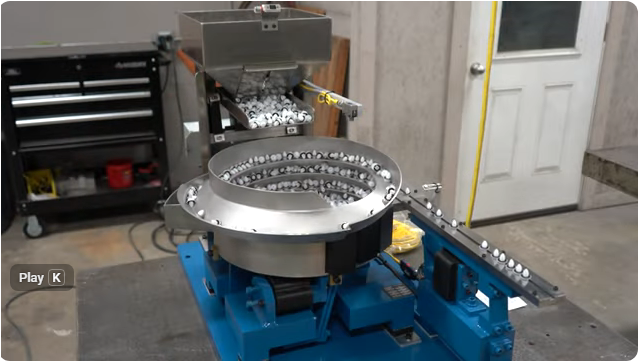
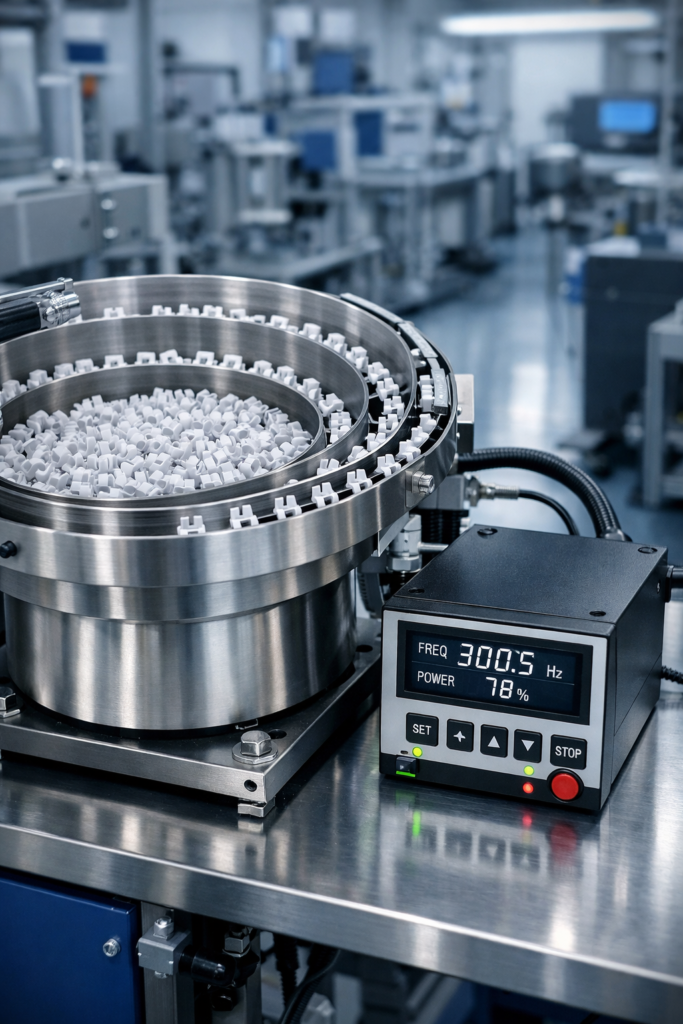
What is an Industrial Vibratory Bowl Feeder?
A vibratory bowl feeder is an automated system designed to:
- Feed plastic clips in a controlled manner
- Orient components in a specific direction
- Deliver parts one-by-one to assembly lines
It uses vibration and gravity to move parts efficiently without manual intervention.
How it is Used & Works
Working Principle (Simple Explanation)
- A bowl with a spiral track holds plastic clips
- Vibrations are generated using an electromagnetic drive
- Clips move upward along the track
- Improperly oriented parts fall back into the bowl
- Correctly aligned clips exit for further processing
👉 The controller adjusts vibration frequency and amplitude for smooth feeding.
Required Components
- Vibratory Bowl (custom-designed for plastic clips)
- Electromagnetic Drive Unit
- Vibratory Feeder Controller (Analog/Digital)
- Base Frame / Mounting Structure
- Sensors (optional for automation feedback)
Operations & Functions
- Controlled feeding of plastic clips
- Speed and flow rate adjustment
- Orientation and alignment of components
- Synchronization with conveyor/assembly systems
- Prevention of clogging and overflow
Key Features and Technology
- Adjustable vibration control (frequency & amplitude)
- Digital display (in advanced controllers)
- Sensor-based automation
- Compact and durable design
- Low power consumption
- Easy installation and integration
Key Benefits & Specifications
Benefits
- High precision feeding
- Reduced manual labor
- Consistent output quality
- Increased production speed
- Minimal downtime
Typical Specifications
- Input: 0–240V AC
- Output: 0–90V DC / 0–110V AC
- Current: 3A–6A
- Display: 7-segment LED (digital models)
- Compact size & lightweight design
🏭 Key Application Areas & Reasons
Industries
- Automotive (clip assembly lines)
- Electronics manufacturing
- Plastic component production
- Packaging & FMCG
- Pharmaceutical industries
Why Used?
- Ensures accuracy in small part feeding
- Reduces human error
- Enables high-speed automation
- Improves productivity and consistency
Steps to Follow (Implementation Guide)
- Identify clip size, shape, and material
- Design customized bowl feeder
- Select suitable controller (analog/digital)
- Install and mount feeder system
- Integrate with production line
- Calibrate vibration settings
- Test and optimize feeding performance
Checklist for You (Before Buying)
- Type of plastic clip (size & shape)
- Required feeding speed
- Automation level needed
- Controller type (digital preferred)
- Space availability
- Integration with existing machines
- Maintenance requirements
📊 Comparison Table
| Feature | Analog Controller | Digital Controller |
|---|---|---|
| Control Method | Manual knob | Push button |
| Accuracy | Moderate | High |
| Display | No display | LED display |
| Automation | Limited | Advanced |
| Cost | Lower | Slightly higher |
| Best Use | Simple applications | Precision automation |
Advantages and Disadvantages
Advantages
- High efficiency and speed
- Accurate part orientation
- Low maintenance
- Energy efficient
- Suitable for mass production
Disadvantages
- Initial setup cost
- Customization required for each part
- Noise due to vibration
- Limited flexibility for different parts without redesign
Key Aspects to Consider
- Material type (plastic clips require smooth handling)
- Feed rate control
- Noise and vibration level
- Custom bowl design
- Controller compatibility
- Future scalability
Examples
- Plastic retainer clips feeding in automotive dashboard assembly
- Clip sorting in packaging lines
- Feeding connectors in electronics manufacturing
- Plastic fastener alignment for automated machines
FAQs
1. What is a vibratory bowl feeder used for?
It is used to automatically feed and orient small parts like plastic clips in production lines.
2. How does a vibratory feeder controller work?
It controls vibration intensity and frequency to regulate material flow.
3. Why use a bowl feeder for plastic clips?
It ensures consistent orientation and high-speed feeding without manual effort.
4. What industries use vibratory feeders?
Automotive, electronics, food processing, pharmaceuticals, and plastics industries.
5. What is the difference between analog and digital controllers?
Analog uses manual control, while digital offers precise and automated adjustments.
6. Can vibratory feeders handle different clip sizes?
Yes, but customization of the bowl is required for each clip type.
7. Is maintenance required for vibratory feeders?
Minimal maintenance is required due to fewer moving parts.
8. How to choose the right feeder system?
Consider part size, feed rate, automation needs, and controller type.
9. Are vibratory feeders energy efficient?
Yes, they consume low power compared to other feeding systems.
10. Can it be integrated with automation systems?
Yes, it easily integrates with conveyors, sensors, and robotic systems.
Conclusion
An industrial vibratory bowl feeder for plastic clips, combined with a reliable controller, is a powerful solution for modern automation. It enhances productivity, ensures precision, and reduces operational costs across industries. If you’re looking to streamline your manufacturing process, this system is a smart investment—request a quote today and take the next step toward automation excellence.

Kathir Sudhir Automation India specializes in advanced motion control systems, industrial automation solutions, and medical-grade linear actuator technologies for healthcare and rehabilitation equipment manufacturers.
With recognized industry certifications and multiple awards for innovation in automation systems, the company delivers reliable, high-performance electromechanical solutions tailored for medical and industrial applications.
Certifications & Recognition
Zed Bronze Certificate
Member at Confederation of Indian Industry (CII)
TANSTIA Member Certificate