
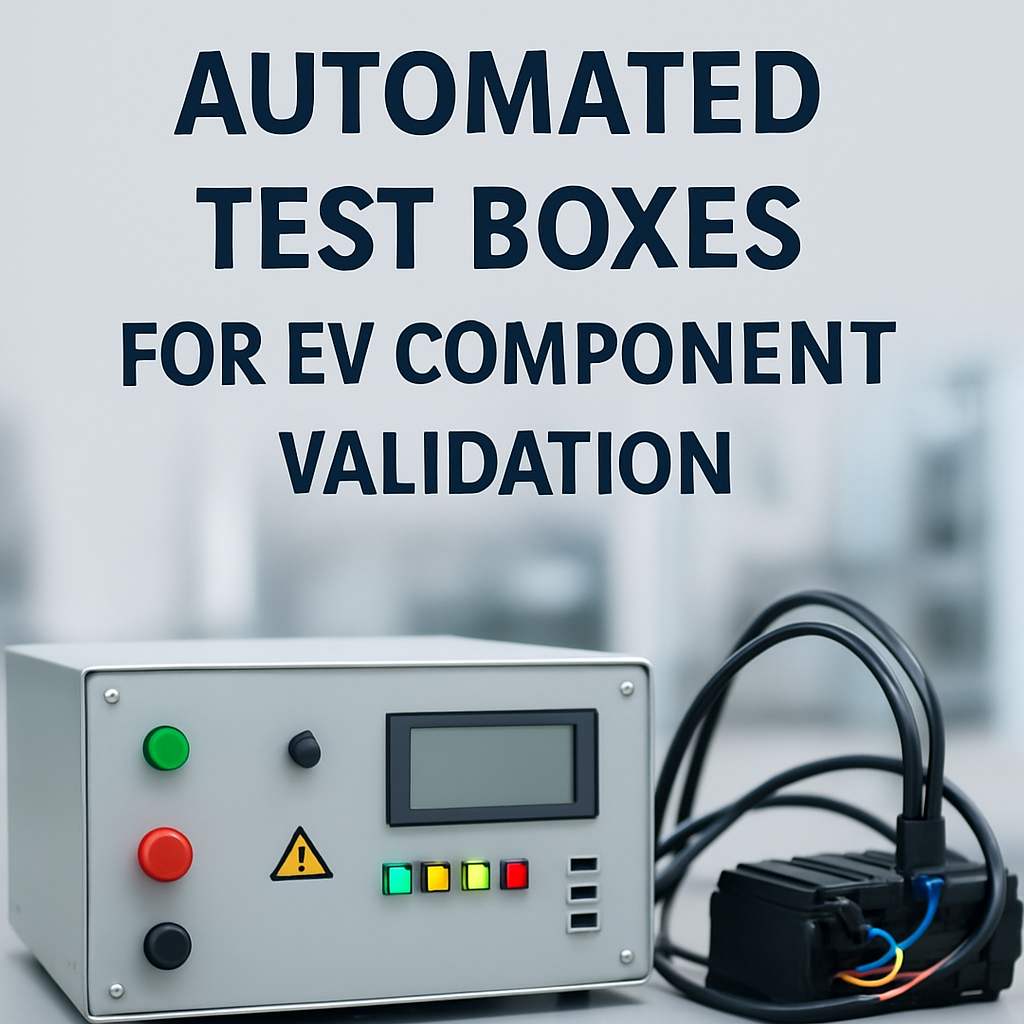
In the electric vehicle (EV) industry, precision and reliability aren’t optional — they are mandatory. Every EV component, from battery packs to control modules, must undergo rigorous validation before reaching the assembly line. This is where automated test boxes come into play, providing an efficient and repeatable method for ensuring quality and functionality at scale.
The Need for Automated Testing in EV Production
EV components are complex and often sensitive to environmental and electrical variations. Manual testing not only increases the risk of human error but also consumes valuable time during production. Automated test boxes eliminate this challenge by providing consistent, fast, and scalable testing solutions.
Whether it’s verifying communication protocols, simulating load conditions, or checking voltage thresholds, these systems make it possible to validate hundreds of units per day with minimal human intervention.
Features That Make Test Boxes Essential
Modern test boxes are not just plug-and-play tools. They are engineered with integrated controllers, custom test jigs, software interfaces, and data logging capabilities. Key features include:
- Multi-point testing with quick-change interfaces
- Programmable logic and testing sequences
- Real-time feedback and error alerts
- High-speed throughput with consistent accuracy
Such features are crucial when validating components like EV chargers, BMS modules, motor controllers, and more.
Indigenised Test Boxes: Built for Indian EV Innovators
Until recently, many Indian EV manufacturers relied on imported testing systems that were costly and slow to customise. Today, indigenised test boxes — designed and built within India — are offering a competitive and reliable alternative.
By using locally sourced materials, firmware, and engineering expertise, these test boxes drastically reduce lead times, support costs, and integration complexity. Most importantly, they are tailored to meet the unique conditions and regulatory requirements of Indian manufacturing environments.
Closing Thoughts
Automated test boxes have become a cornerstone of quality assurance in EV manufacturing. They bring speed, scalability, and precision to the testing process while helping manufacturers meet stringent standards.
For companies focused on Make-in-India goals and next-gen mobility, investing in automated and indigenised test boxes isn’t just an upgrade — it’s a strategic move toward smarter production and greater self-reliance.

Kathir Sudhir Automation India specializes in advanced motion control systems, industrial automation solutions, and medical-grade linear actuator technologies for healthcare and rehabilitation equipment manufacturers.
With recognized industry certifications and multiple awards for innovation in automation systems, the company delivers reliable, high-performance electromechanical solutions tailored for medical and industrial applications.
Certifications & Recognition
Zed Bronze Certificate
Member at Confederation of Indian Industry (CII)
TANSTIA Member Certificate