
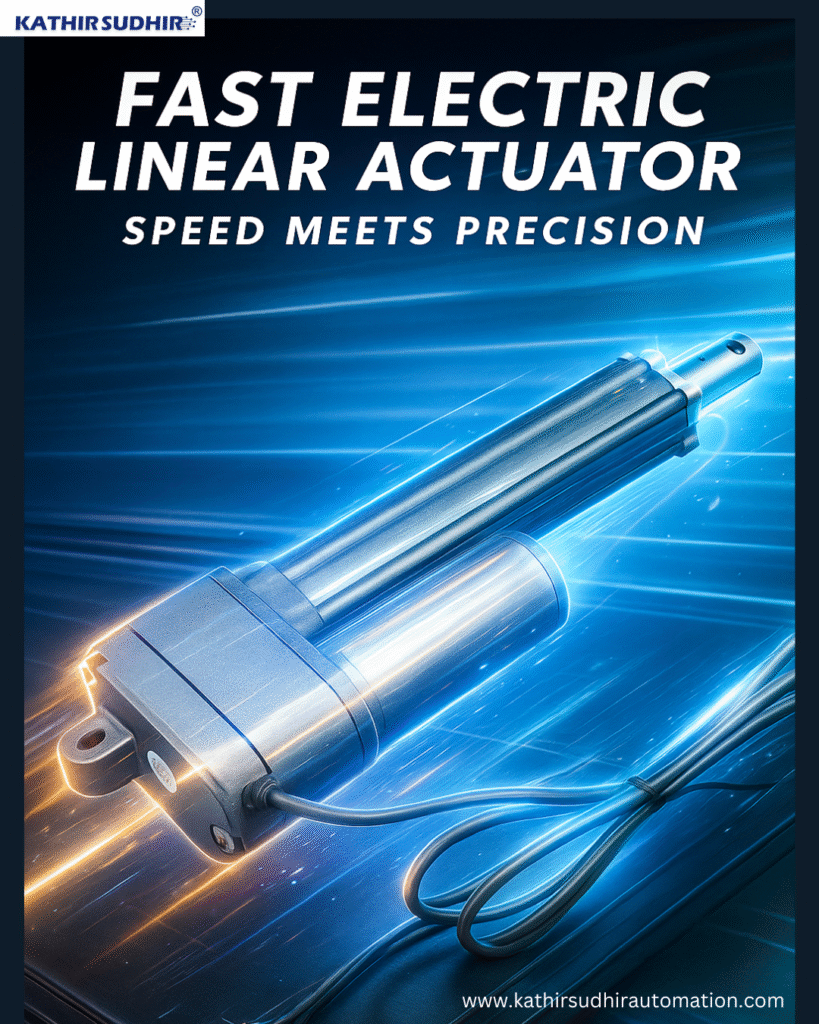
In the world of industrial automation, speed and precision define efficiency. Traditional motion systems like hydraulics and pneumatics often struggle to maintain consistent speed and accuracy. This is where high-speed electric linear actuators transform the game. Designed for fast, reliable, and repeatable motion, these actuators deliver the perfect balance of speed, force, and control — making them an essential component in modern automated industries.
Why Speed Matters in Industrial Automation
Every second counts in an automated production line. Faster motion means higher throughput, reduced downtime, and better utilization of resources. Whether it’s material handling, assembly lines, packaging systems, or lifting mechanisms, a high-speed actuator ensures quick positioning and smooth operation — improving productivity without compromising precision.
What Makes Electric Actuators High-Speed
High-speed electric linear actuators are engineered with advanced motor technology and screw drive mechanisms that allow rapid linear motion with exceptional repeatability.
Key features include:
- High RPM motors for faster response times
- Low-friction ball screw designs for smooth movement
- Smart control integration with PLC or dedicated controllers
- Compact, lightweight construction for quick acceleration
- Adjustable stroke and speed control for versatile operations
These design advantages make them suitable for industries demanding both speed and accuracy in motion control.
Applications in Industrial Automation
High-speed electric linear actuators are used across multiple automation systems, including:
- Automated Assembly Lines: Quick part positioning and press-fit operations.
- Conveyor Systems: Rapid height and angle adjustments for dynamic production needs.
- Packaging Machines: Fast and repetitive motion for sealing, cutting, and sorting.
- Inspection & Sorting Systems: High-speed actuation ensures precise positioning.
- Robotic End Effectors: Fast response for accurate pick-and-place applications.
Their versatility makes them a preferred replacement for pneumatic or hydraulic cylinders in modern factories.
Advantages Over Traditional Actuators
Compared to pneumatic or hydraulic systems, electric actuators offer superior speed control and clean operation.
Here’s how they stand out:
- Instant start-stop response for precision control
- No air or fluid leakage, ensuring a maintenance-free setup
- Higher efficiency with minimal power loss
- Energy-saving and environmentally friendly design
- Easy integration with automation software and control systems
These benefits not only increase production speed but also reduce long-term operational costs.
Future of High-Speed Actuation
As industries move toward Industry 4.0, the demand for intelligent, high-speed, and energy-efficient motion systems continues to grow. Electric linear actuators are evolving with IoT-enabled monitoring, real-time diagnostics, and AI-based motion control, paving the way for a smarter and faster automation environment.
Conclusion
High-speed electric linear actuators are redefining the standards of industrial automation. They combine speed, precision, and reliability — enabling industries to achieve faster cycle times, improved accuracy, and enhanced overall productivity.

Kathir Sudhir Automation India specializes in advanced motion control systems, industrial automation solutions, and medical-grade linear actuator technologies for healthcare and rehabilitation equipment manufacturers.
With recognized industry certifications and multiple awards for innovation in automation systems, the company delivers reliable, high-performance electromechanical solutions tailored for medical and industrial applications.
Certifications & Recognition
Zed Bronze Certificate
Member at Confederation of Indian Industry (CII)
TANSTIA Member Certificate