
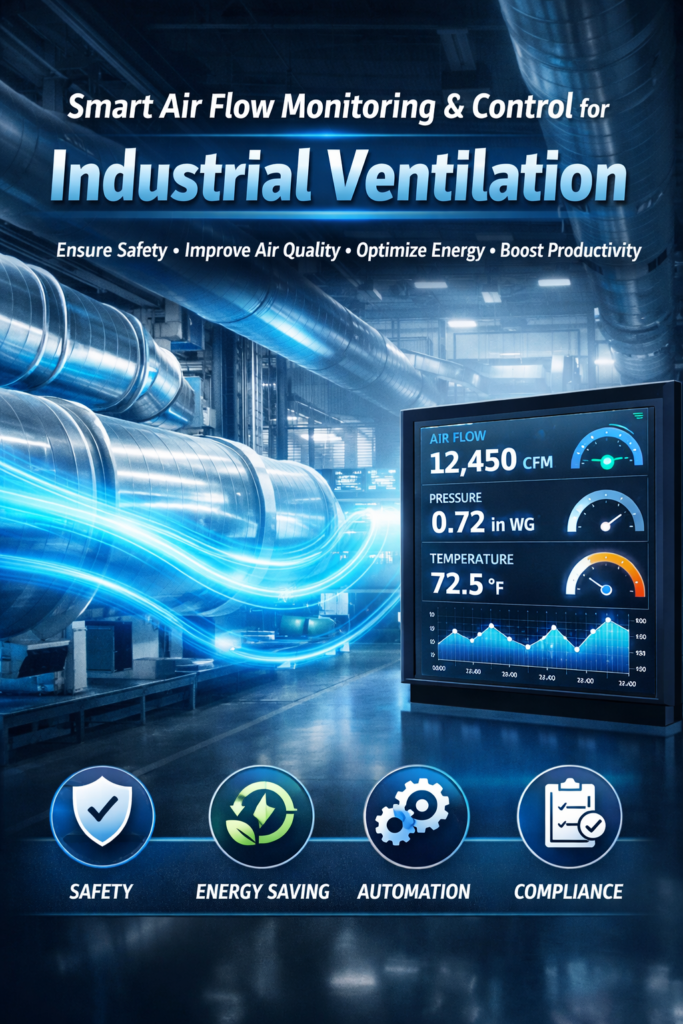
In modern industrial environments, proper ventilation is not just about comfort—it is a critical factor for safety, efficiency, and regulatory compliance. Air flow monitoring and control systems play a vital role in maintaining optimal air quality, removing harmful contaminants, and ensuring stable process conditions. These systems continuously measure, regulate, and optimize the movement of air in industrial spaces.
Let’s explore the key industrial areas where air flow monitoring and control systems are widely used.
1. Manufacturing Plants
Manufacturing facilities often deal with dust, fumes, heat, and airborne particles. Without proper ventilation, these pollutants can affect product quality and worker health.
Applications:
- Removal of welding fumes, chemical vapors, and dust
- Temperature and humidity control
- Maintaining clean air in assembly lines
- Energy-efficient ventilation management
Air flow control systems ensure consistent air circulation, preventing the buildup of hazardous gases and maintaining a stable working environment.
2. Chemical & Pharmaceutical Industries
In chemical and pharmaceutical plants, even a small variation in air flow can impact product quality and safety. These environments require precise air control to avoid contamination and maintain cleanroom standards.
Applications:
- Cleanrooms and sterile production zones
- Fume hoods and exhaust systems
- Pressure differential control between rooms
- Prevention of cross-contamination
Air flow monitoring systems help maintain correct pressure levels and ensure safe exhaust of toxic or volatile substances.
3. Power Plants
Power generation facilities involve high temperatures, combustion gases, and heavy machinery that require continuous ventilation.
Applications:
- Boiler rooms and turbine halls
- Cooling systems
- Smoke and exhaust gas management
- Heat dissipation
Controlled air flow prevents overheating, reduces equipment stress, and ensures safe operation.
4. Food & Beverage Processing Units
Hygiene is a top priority in food processing industries. Improper ventilation can lead to moisture buildup, microbial growth, and contamination.
Applications:
- Maintaining hygienic conditions
- Odor control
- Temperature and humidity regulation
- Prevention of airborne contamination
Air flow control systems help in maintaining consistent air quality while meeting food safety regulations.
5. Automotive & Paint Booth Facilities
Paint booths and surface treatment areas need highly controlled air flow to ensure uniform coating and prevent dust settlement.
Applications:
- Controlled laminar air flow
- Removal of paint fumes
- Drying and curing processes
- Worker safety
Precise air flow monitoring ensures high-quality finishing and safe working conditions.
6. Data Centers & Electronics Manufacturing
Electronic components are sensitive to heat, humidity, and dust. Poor ventilation can lead to overheating and equipment failure.
Applications:
- Cooling management
- Hot and cold aisle containment
- Dust control
- Equipment lifespan optimization
Air flow control systems help maintain stable temperature zones and prevent thermal hotspots.
7. Mining & Heavy Industries
Mining and heavy industrial environments generate large amounts of dust, toxic gases, and heat.
Applications:
- Dust extraction
- Gas dilution
- Fresh air supply
- Worker safety
Ventilation systems with air flow monitoring ensure continuous circulation of fresh air, reducing health risks.
8. Wastewater Treatment & Waste Management Plants
These plants release harmful gases like methane, ammonia, and hydrogen sulfide.
Applications:
- Odor control
- Toxic gas removal
- Moisture management
- Corrosion prevention
Air flow control systems ensure safe exhaust and improve overall plant safety.
Benefits of Air Flow Monitoring & Control Systems
- Improved worker safety
- Enhanced product quality
- Energy efficiency
- Regulatory compliance
- Reduced equipment wear and tear
- Optimized process performance
Conclusion
Air flow monitoring and control systems are an essential part of industrial process ventilation. From manufacturing plants to pharmaceutical labs and data centers, these systems ensure safe, efficient, and compliant operations. By maintaining optimal air circulation, industries can protect workers, improve product quality, and reduce energy costs.

Kathir Sudhir Automation India specializes in advanced motion control systems, industrial automation solutions, and medical-grade linear actuator technologies for healthcare and rehabilitation equipment manufacturers.
With recognized industry certifications and multiple awards for innovation in automation systems, the company delivers reliable, high-performance electromechanical solutions tailored for medical and industrial applications.
Certifications & Recognition
Zed Bronze Certificate
Member at Confederation of Indian Industry (CII)
TANSTIA Member Certificate